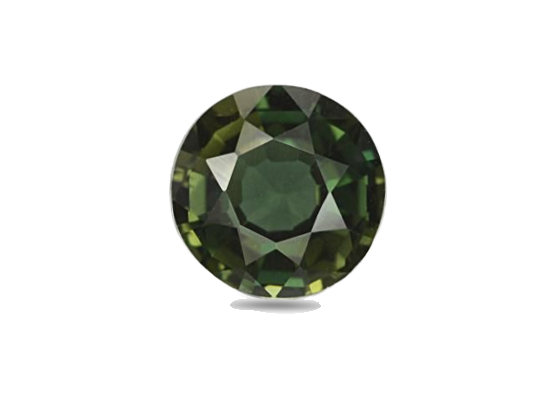
Kornerupine is a green gemstone that most people, and many jewelers, have never heard of. It is rare, almost always natural and untreated, and it shows two colors at once: green from one angle and a warm brown or yellow from another. If you want a stone nobody else is wearing, this is it. We set natural kornerupine in 925 sterling silver and solid gold at our studio on Sukhumvit 71, Bangkok.
This page covers what kornerupine is, how to wear and care for it, what makes a good stone, how to see the stones at our shop, and how to order one in Bangkok or anywhere in Thailand.
What kornerupine is
Kornerupine is a boron-bearing silicate mineral first described in Greenland in 1884 and named after the Danish geologist Andreas Kornerup. Gem-quality crystals are found in only a handful of places, and most are small, which is why kornerupine is called a collector’s stone.
Its color runs from a fresh emerald-like green to a soft yellowish or olive green, and rarely a blue-green. The most striking thing about it is pleochroism: turn the stone and the color shifts between green and a golden brown. A good cutter places the green on top so you see it face up, with flashes of warm color as you move.
Kornerupine is almost never treated. Every stone we set is natural, kornerupine included, and if a stone has had any treatment we tell you before you order.
Kornerupine facts at a glance
- Color: green to yellowish green, rarely blue-green, with brown flashes from the side
- Hardness: 6.5 to 7 on the Mohs scale
- Treatment: almost never treated
- Rarity: rare; most stones are under one carat
- Best for: pendants and earrings; rings with some care
- Care: warm soapy water and a soft brush; no ultrasonic or steam cleaners
- Price: depends on the quality and carat you choose; we quote before you order
How to wear and care for kornerupine
At 6.5 to 7 on the Mohs scale, kornerupine is about as hard as peridot, a little softer than quartz. That makes it ideal for pendants and earrings, which take fewer knocks. A kornerupine ring is a lovely choice too; take it off for the gym, cleaning and gardening and it will stay bright.
Clean it in warm soapy water with a soft brush, then rinse and dry. Keep it away from ultrasonic and steam cleaners, sudden heat and strong household cleaners. If it ever needs a polish or a check of the setting, bring it to our shop. Maintenance is free on jewelry we made.
What makes a good kornerupine
Color matters most. The most valued kornerupine is a pure, bright green with little yellow or brown when you look straight down at it. Olive and yellowish greens are more common and cost less.
Clarity comes next. A good stone looks clean to the eye. Some kornerupine has fine parallel needles inside that, cut as a dome, show a line of light called a cat’s eye. Those are rarer still.
Cut gives the stone its life and decides which color you see. A well oriented stone shows green face up and sparkles across its whole face.
Size is the hardest part. Clean stones over one carat are scarce, so a larger kornerupine is a real find.
Where kornerupine comes from
Most gem kornerupine comes from Madagascar, Sri Lanka, Tanzania and Kenya, with smaller finds in Myanmar and other parts of East Africa. Sri Lanka is the source of most cat’s eye kornerupine, and East Africa of the brightest greens. If you want to know the origin of a particular stone, ask us: we offer certified stones, and an uncertified stone can be sent to a gem lab for a report at extra cost. For a stone this rare, a lab report is worth considering.
Kornerupine or something greener?
If you love green, kornerupine sits beside some better known stones. Peridot is a brighter yellowish green and the August birthstone. Emerald is a deeper blue-green and one of the precious stones. Tsavorite garnet is the most intense green of all. Kornerupine is the quiet, unusual choice of the group, with that green and gold shift no other stone here has. Our gemstone guide shows all the stones we work with.
How to tell kornerupine from look-alikes
Because so few people know kornerupine, it is easily mistaken for a better known green stone, and the reverse happens too. The clue you can see with your own eyes is its color shift. Turn a kornerupine and you will usually see three tones: a green, a yellowish green and a reddish or golden brown. Green tourmaline shows only two shades of green. Peridot barely changes color, but under a loupe its back facet edges look doubled, an effect that is much weaker in kornerupine. Andalusite is the closest twin by eye, with its own green and brown flashes, but it is usually cut to show its colors mixed across the face of the stone.
A gem lab settles it quickly. Kornerupine has a refractive index of about 1.66 to 1.68 and a specific gravity of about 3.3, which already rules out emerald, green tourmaline and andalusite, all lower. It is also biaxial, while tourmaline is uniaxial, a difference the lab sees with a polariscope. Peridot overlaps in refractive index, but its double refraction is more than twice as strong. When a reading is borderline, Raman spectroscopy gives the final answer.
See kornerupine at our shop in Bangkok
Turn a kornerupine in your fingers and the green gives way to flashes of golden brown, a shift no photo captures well. When you book, let us know it is kornerupine and we will open up more of our kornerupine for you, from fresh green to olive, so you can find the one that shows the most green face up.
Walk in any time we are open, or book ahead so Yaron is there to help with the stone, the design and the metal, from 925 silver and gold plating to solid 9K, 14K or 18K gold.
Kornerupine is known as a collector’s stone, so keeping it loose is a natural choice. You can buy one on its own with no jewelry order, and we would be very happy to make a piece for you.
See kornerupine with Yaron
TOANOI House, 259/80 Phibunwet Village, Sukhumvit 71, Bangkok. Monday to Friday 9:30 to 17:00 and Saturday 10:00 to 15:00. We speak Thai, English and Japanese.
Not in Bangkok? Message us and we will send photos and prices of the kornerupine we have.
Kornerupine questions we get
Is your kornerupine natural?
Yes. Every gemstone we set is natural, kornerupine included, and kornerupine is almost never treated. We are a member of the Thai Gem and Jewelry Traders Association.
Why does kornerupine change color when I turn it?
Kornerupine is strongly pleochroic: the crystal shows different colors along different directions, usually green one way and golden brown another. It is a natural property of the stone, not a treatment.
Can I wear a kornerupine ring every day?
Yes, with a little care. Kornerupine is 6.5 to 7 on the Mohs scale, so take the ring off for the gym, cleaning and gardening. Pendants and earrings are the easiest way to wear it daily.
How much does kornerupine jewelry cost?
It depends on the quality and carat of the stone you choose, and on the metal. We give you the price before anything is made.
Can I buy just the stone?
Yes. A loose kornerupine is yours to keep as it is, and for a stone this rare you can also ask us about a lab report. We are happy to set it now or at a later date.
How long does a kornerupine piece take?
7 to 10 working days from your order, because the stones are already here in our shop, then 1 to 3 working days for delivery inside Thailand. We also ship abroad by FedEx.
Every kornerupine piece is made to order by our team in Bangkok in 925 sterling silver or solid gold, with a 3-year warranty, free maintenance and free shipping across Thailand.
