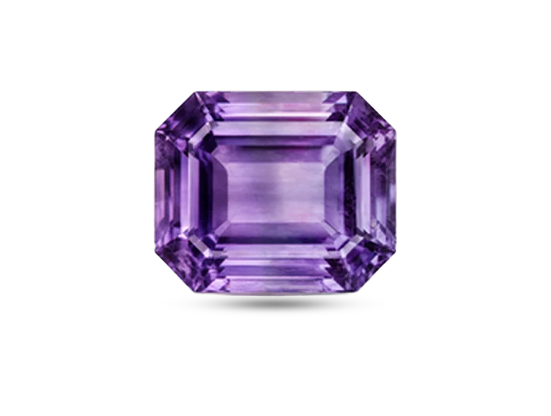
Fluorite comes in more colors than almost any other mineral: purple, green, blue, yellow, pink and clear, and often several of them in bands through a single stone. It has a gentle, glassy glow, a little like colored water held up to the light, and it gave its name to fluorescence, the glow some minerals give off under ultraviolet light. It is also a soft stone, so we mostly set it as pendants and earrings, where that softness does not matter. We set natural fluorite in 925 sterling silver and solid gold at our studio on Sukhumvit 71, Bangkok.
This page covers what fluorite is, where its colors come from, rainbow fluorite and Blue John, how it compares with other colorful stones, how to wear and care for it, what makes a good stone, how to see the stones at our shop, and how to order in Bangkok or anywhere in Thailand.
What fluorite is
Fluorite is calcium fluoride, a common mineral that grows as neat cubes and sometimes as eight sided crystals. Pure fluorite has no color at all. The colors come from tiny traces of other elements and from small defects in the crystal, many of them caused by natural radiation in the rock, and they can change from one growth layer to the next. That is why a single crystal can be purple at its heart and green at its edges.
The name comes from the Latin fluere, to flow, because miners and metal workers added fluorite to ore to help it melt and flow. In the nineteenth century scientists noticed that some fluorite glows blue under ultraviolet light, and the word fluorescence was made from its name.
Fluorite is usually not treated. A few stones are heated or irradiated to change their color, and fragile material such as Blue John is often stabilized with resin before it is cut. Every stone we set is natural, and if a fluorite has had any treatment we tell you before you order.
Fluorite facts at a glance
- Family: calcium fluoride; the mineral that marks 4 on the Mohs scale
- Color: purple, green, blue, yellow, pink and colorless, often banded
- Hardness: 4 on the Mohs scale, with easy cleavage
- Treatment: usually untreated
- Best for: pendants and earrings; not for everyday rings
- Care: lukewarm soapy water and a soft cloth; no ultrasonic or steam cleaners, no heat, no knocks
- Price: depends on the quality and carat you choose; we quote before you order
Rainbow fluorite, Blue John and the glow
Rainbow fluorite is the name for stones with bands of purple, green, blue and clear in one piece. Cut across the bands, it shows stripes like layers of a landscape; cut along them, a stone can drift from purple at one end to green at the other. No two pieces are alike, which is a big part of its charm.
Blue John is a rare purple and yellow banded fluorite found only near Castleton in Derbyshire, England. It has been worked into bowls and ornaments since the eighteenth century and is still mined in small amounts. It is fragile, so it is nearly always stabilized before it becomes jewelry.
The glow is easy to see for yourself. Many fluorites shine blue or violet under a small UV torch, and a few rare stones even change color between daylight and indoor light. In ordinary light, fluorite simply shows its own soft color.
Fluorite and other colorful stones
Amethyst is the purple stone people most often confuse with fluorite. Amethyst is quartz, 7 on the Mohs scale and fine for rings; fluorite is 4, with a softer, more watery purple and often green bands. If you want a purple stone for a ring you wear every day, choose amethyst.
Tourmaline also comes in almost every color, sometimes two or three in one crystal, but it is much harder, 7 to 7.5, and is faceted for sparkle. Fluorite gives you the many colors in a gentler, more glowing way.
Iolite has a violet blue close to some blue fluorite and is harder, at 7 to 7.5. It is the better pick if you love that color in a ring.
How to wear and care for fluorite
Fluorite is 4 on the Mohs scale, so ordinary dust and even a steel key can scratch it, and it has perfect cleavage in four directions, which means a sharp knock can split off a corner. A ring that goes everywhere with you is simply not the right job for it. Pendants and earrings, which stay away from desks, door handles and bags, are where fluorite looks its best for years. If you really want a fluorite ring, choose a deep bezel that covers the edges and keep it for evenings out rather than every day.
Clean it gently in lukewarm soapy water with a soft cloth, then rinse and pat dry. Never use an ultrasonic or steam cleaner. Avoid hot water and sudden changes of temperature, which can crack it, and keep perfume, hairspray and household chemicals away from it. Store it on its own in a soft pouch so harder stones cannot scratch it. Some purple and blue fluorite can slowly fade if it sits in strong sunlight for a long time, so keep it in a drawer when you are not wearing it. If it ever needs a polish or a check of the setting, bring it to our shop. Maintenance is free on jewelry we made.
What makes a good fluorite
Color comes first. Look for clear, saturated color: a deep purple, a bright blue or a clean mint green are the favorites. In banded stones, crisp bands with strong contrast are the most beautiful.
Clarity is often good, and fine fluorite can be clean enough to facet. Small veils and tiny internal cleavage cracks are common; check that none reach the surface, where a knock could make them grow.
Cut can be a cabochon, a bead, a polished slice or a faceted stone. Faceting fluorite is slow, careful work because it is so soft and splits so easily, so a faceted fluorite with crisp edges is a sign of a skilled cutter.
Size is rarely a limit. Fluorite is found in large clean pieces, so a bold statement pendant is quite possible.
Where fluorite comes from
Fluorite is mined in many countries. China supplies much of the rainbow and green material, and Mexico is one of the largest producers. Fine crystals and gem rough also come from South Africa, Namibia, Spain, England, Argentina, Brazil and the United States, and Blue John comes only from Derbyshire. If you want to know the origin of a particular stone, ask us: we offer certified stones, and an uncertified stone can be sent to a gem lab for a report at extra cost.
See fluorite at our shop in Bangkok
Fluorite does not photograph well. The bands and the soft, glassy glow get lost on a screen, and purple can turn blue or gray. If you tell us ahead that fluorite is the stone, we will have several ready, plain purple, green and blue as well as banded rainbow pieces, and we can talk through which kind of jewelry suits a stone this soft.
Walk in any time we are open, or book ahead so Yaron is there to help with the stone, the design and the metal, from 925 silver and gold plating to solid 9K, 14K or 18K gold.
Plenty of people who love fluorite collect it, and a polished piece is a pleasure to own by itself. You can buy a loose fluorite with no jewelry order needed, and if you later want it in a pendant or earrings, we will set it for you.
See fluorite with Yaron
TOANOI House, 259/80 Phibunwet Village, Sukhumvit 71, Bangkok. Monday to Friday 9:30 to 17:00 and Saturday 10:00 to 15:00. We speak Thai, English and Japanese.
Not in Bangkok? Message us and we will send photos and prices of the fluorite we have.
Fluorite questions we get
Is your fluorite natural?
Yes. Every gemstone we set is natural, fluorite included, and fluorite is usually untreated. A few stones on the market are heated, irradiated or stabilized with resin; if a stone has had any treatment, we tell you before you order. We are a member of the Thai Gem and Jewelry Traders Association.
Why does fluorite come in so many colors?
Pure fluorite is colorless. Traces of other elements and small defects in the crystal create purple, green, blue, yellow and pink, and these can change layer by layer as the crystal grows, which is what makes the bands.
Can I wear a fluorite ring every day?
We do not recommend it. Fluorite is only 4 on the Mohs scale and splits easily if it is knocked, so an everyday ring will scratch and chip. Pendants and earrings are the right choice, and a ring with a deep bezel is fine for occasional wear.
Does fluorite glow in the dark?
Not usually. Many fluorites glow blue or violet under an ultraviolet lamp, and that effect, fluorescence, was named after the stone. In normal light it simply shows its own color.
How much does fluorite jewelry cost?
It depends on the quality and carat of the stone you choose, and on the metal. We give you the price before anything is made.
Can I buy just the stone?
Yes. You can buy a fluorite by itself, with no setting and no jewelry order. If you want it made into a pendant or earrings, now or later, we are happy to set it.
How long does a fluorite piece take?
7 to 10 working days from your order, because the stones are already here in our shop, then 1 to 3 working days for delivery inside Thailand. We also ship abroad by FedEx.
Every fluorite piece is made to order by our team in Bangkok in 925 sterling silver or solid gold, with a 3-year warranty, free maintenance and free shipping across Thailand.
