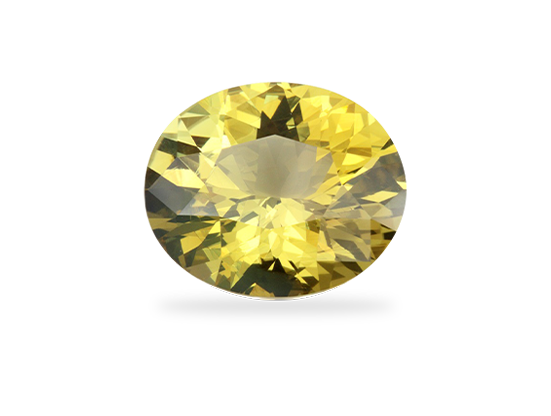
Chrysoberyl is one of the hardest gemstones you can wear, a bright golden yellow to fresh green stone that shrugs off daily knocks. It is also the family behind two famous rarities: cat’s eye, with a line of light that glides across the stone, and alexandrite, which changes color from green to red. We set natural chrysoberyl in 925 sterling silver and solid gold at our studio on Sukhumvit 71, Bangkok.
This page covers what chrysoberyl is, its two famous varieties, how it compares with other yellow and green gems, how to wear and care for it, what makes a good stone, how to see the stones at our shop, and how to order one in Bangkok or anywhere in Thailand.
What chrysoberyl is
Chrysoberyl is a beryllium aluminum oxide. The name comes from the Greek for “golden beryl”, but it is a different mineral from beryl, the family of emerald, aquamarine and heliodor. The similar names are only history.
At 8.5 on the Mohs scale it is harder than topaz, spinel and every beryl, and among popular gemstones only diamond, sapphire and ruby are harder. It is also tough, so it resists chipping as well as scratching. That makes it one of the best stones for a ring you never take off.
Plain chrysoberyl comes in lemon, golden and honey yellow, yellowish green and a soft greenish brown. The color comes from a little iron, and sometimes chromium for the greener stones. Chrysoberyl is almost never treated. Every stone we set is natural, chrysoberyl included, and if a stone has had any treatment we tell you before you order.
Chrysoberyl facts at a glance
- Color: lemon to golden yellow, yellowish green, honey and greenish brown
- Hardness: 8.5 on the Mohs scale
- Varieties: cat’s eye (cymophane) and alexandrite
- Treatment: almost never treated
- Best for: rings worn every day, pendants, earrings and bracelets
- Care: warm soapy water and a soft brush
- Price: depends on the quality and carat you choose; we quote before you order
Cat’s eye and alexandrite
Cat’s eye chrysoberyl, also called cymophane, is the classic cat’s eye stone. Fine needle-like fibres inside the crystal reflect light into a single bright line when the stone is cut as a smooth dome. Turn it and the line moves like the eye of a cat. The best stones show a sharp, straight eye down the center and a honey-and-milk look when you shine a light from the side. When a jeweler says just “cat’s eye”, this is the stone they mean.
Alexandrite is the color-change chrysoberyl. Chromium makes it look green to bluish green in daylight and purplish red under warm indoor light. It was first found in Russia in the nineteenth century and is one of the rarest and most expensive colored stones. Alexandrite is also one of the June birthstones.
Chrysoberyl and other yellow and green gems
Yellow sapphire is harder at 9 and usually costs more. Chrysoberyl gives a similar bright yellow with a slightly greener, livelier look.
Citrine is yellow quartz, 7 on the Mohs scale, warmer and often more orange, and much softer than chrysoberyl.
Heliodor, the yellow beryl, has a cooler lemon color and is a little softer at 7.5 to 8. Chrysoberyl has more brilliance and wears better in a daily ring.
Peridot is the yellowish green stone of August. Green chrysoberyl can look similar, but it is far harder and keeps its polish much longer.
How to wear and care for chrysoberyl
At 8.5 on the Mohs scale and with good toughness, chrysoberyl is about as easy to live with as a gemstone gets. It suits an everyday ring, a bracelet that knocks against desks, and earrings and pendants alike. As with any jewelry, take it off for the gym and heavy work to protect the setting.
Clean it in warm soapy water with a soft brush, then rinse and dry. Cat’s eye stones are cut as smooth domes, so a soft cloth brings back their shine. If it ever needs a polish or a check of the setting, bring it to our shop. Maintenance is free on jewelry we made.
What makes a good chrysoberyl
Color comes first. The most valued faceted stones are a clean, bright yellow to yellowish green with no brown. Honey and brownish stones are lovely and cost less.
Clarity matters for faceted stones, which should look clean to the eye. For cat’s eye it is the opposite: the fine fibres inside are what make the eye.
The eye is everything in a cat’s eye stone. Look for a thin, sharp line that runs straight across the center and moves smoothly as you turn the stone.
Cut and size finish the picture. A well cut faceted chrysoberyl is very bright. Clean stones over two or three carats are uncommon, and the price rises with size.
Where chrysoberyl comes from
Most chrysoberyl comes from Sri Lanka and Brazil, with more from Madagascar, Tanzania, India and Myanmar. Sri Lanka is famous for fine cat’s eye. If you want to know the origin of a particular stone, ask us: we offer certified stones, and an uncertified stone can be sent to a gem lab for a report at extra cost. For a cat’s eye or an alexandrite, a lab report is worth having.
See chrysoberyl at our shop in Bangkok
A well cut chrysoberyl is very bright, and the gap between lemon, golden and honey tones is easier to judge in your hand than on a screen. If you mention chrysoberyl when you book, we will prepare a wider choice across those yellows and the yellowish greens, in a range of sizes, to try in silver and gold.
Walk in any time we are open, or book ahead so Yaron is there to help with the stone, the design and the metal, from 925 silver and gold plating to solid 9K, 14K or 18K gold.
Tough as well as hard, chrysoberyl keeps well as a loose stone until you pick a design. You can buy the stone alone with no jewelry order, and we would be very happy to make a piece for you.
See chrysoberyl with Yaron
TOANOI House, 259/80 Phibunwet Village, Sukhumvit 71, Bangkok. Monday to Friday 9:30 to 17:00 and Saturday 10:00 to 15:00. We speak Thai, English and Japanese.
Not in Bangkok? Message us and we will send photos and prices of the chrysoberyl we have.
Chrysoberyl questions we get
Is your chrysoberyl natural?
Yes. Every gemstone we set is natural, chrysoberyl included, and chrysoberyl is almost never treated. We are a member of the Thai Gem and Jewelry Traders Association.
Is chrysoberyl a kind of beryl?
No. The name means “golden beryl” in Greek, but chrysoberyl is a different mineral. It is harder than beryl, at 8.5 on the Mohs scale against 7.5 to 8.
What is cat’s eye chrysoberyl?
It is chrysoberyl with fine fibres inside that, cut as a smooth dome, reflect light into one bright line. It is the classic cat’s eye stone, also called cymophane.
Is alexandrite a chrysoberyl?
Yes. Alexandrite is the color-change variety of chrysoberyl, green in daylight and purplish red under warm indoor light. It is rare and costs much more than yellow chrysoberyl.
How much does chrysoberyl jewelry cost?
It depends on the quality and carat of the stone you choose, and on the metal. We give you the price before anything is made.
Can I buy just the stone?
Yes. You can buy a loose chrysoberyl and keep it just as it is. We are happy to set it in an everyday ring or any other piece, now or whenever you come back to us.
How long does a chrysoberyl piece take?
7 to 10 working days from your order, because the stones are already here in our shop, then 1 to 3 working days for delivery inside Thailand. We also ship abroad by FedEx.
Every chrysoberyl piece is made to order by our team in Bangkok in 925 sterling silver or solid gold, with a 3-year warranty, free maintenance and free shipping across Thailand.
