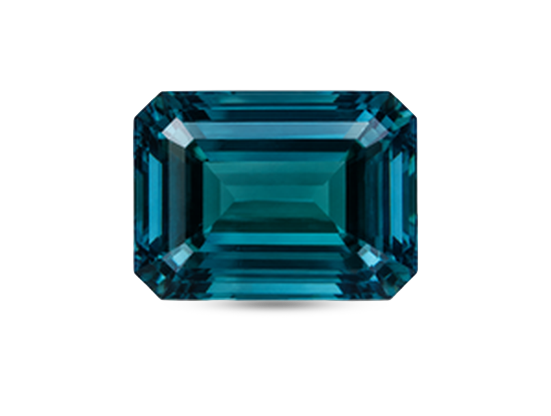
Indicolite is the blue side of tourmaline: deep teal, ocean blue, sometimes a cool blue-green like seawater over sand. It is one of the rarer tourmaline colors, and a good one has a calm, inky depth that you do not find in brighter blue stones. It is hard enough for rings and everyday wear, and it looks very good in both silver and gold. We set natural indicolite in 925 sterling silver and solid gold at our studio on Sukhumvit 71, Bangkok.
This page covers what indicolite is, why it looks darker from one side, how it differs from paraiba and other blue stones, how to wear and care for it, what makes a good stone, where it comes from, how to see the stones at our shop, and how to order in Bangkok or anywhere in Thailand.
What indicolite is
Indicolite is the trade name for blue and blue-green tourmaline. Most of it is elbaite, the same tourmaline species that gives us pink rubellite and many of the green stones. The name comes from indigo, and the blue color comes mainly from iron in the crystal.
Blue is less common than green or pink in tourmaline, and a clean, saturated blue that is not too dark is less common still. Many indicolite crystals come out of the ground so dark that they look nearly black in the face of the stone. That is why the trade has a long habit of heating them.
Heat can lighten a dark indicolite and open up its blue. It is a stable, accepted treatment and it does not fade. Every stone we set is natural, but indicolite is often heated, so we always tell you before you order whether the stone in front of you has been heated or not.
Indicolite facts at a glance
- Family: tourmaline, mostly the elbaite species
- Color: blue, teal and blue-green, from light to very deep
- Hardness: 7 to 7.5 on the Mohs scale
- Treatment: often heated to lighten dark stones; we tell you before you order
- Best for: rings, pendants, earrings and bracelets
- Care: warm soapy water and a soft cloth; no steam cleaners or sudden heat
- Price: depends on the quality and carat you choose; we quote before you order
Why indicolite looks darker from one side
Tourmaline is strongly pleochroic, which means it shows a different color or depth depending on the direction you look through the crystal. In indicolite the difference is dramatic. Looking down the length of the crystal, the color is often very dark, close to black. Looking across it, you see a lighter, brighter blue or green.
A good cutter takes this into account. With a dark crystal, the top of the stone is usually placed so you look across the crystal, which gives a livelier blue. With a pale crystal, a cutter may do the opposite to deepen the color. When you look at indicolite in the shop, tilt it and turn it: you will often see teal from one side and a purer blue from another. That shifting is part of its charm.
Indicolite and other blue stones
Paraiba tourmaline is also blue tourmaline, but its color comes from copper, and it glows with a neon brightness that indicolite does not have. Indicolite is deeper and quieter, and it is far easier to find in good sizes.
Chrome tourmaline sits at the green end of the family, an intense grass green. Some blue-green indicolite comes close to it, but indicolite always keeps that cool blue undertone.
Aquamarine is a lighter, airy sky blue. If you love blue but want something with more weight and mood, indicolite is the deeper choice.
Sapphire is harder and usually a more royal, violet-leaning blue. Indicolite leans toward green and teal, and it gives you a large, rich blue stone for less than a sapphire of the same size.
How to wear and care for indicolite
At 7 to 7.5 on the Mohs scale, indicolite is harder than quartz and wears well in rings, including rings you wear most days. Like any faceted gem it can chip on a hard edge, so take it off for the gym, moving furniture and heavy cleaning, and keep it apart from harder stones in your jewelry box.
Clean it in warm soapy water with a soft brush or cloth, then rinse and dry. Avoid steam cleaners and sudden changes of temperature. Tourmaline also picks up a small electric charge when it warms up, so a stone that has been in the sun may collect a little dust. A quick wipe is all it needs. If it ever needs a polish or a check of the setting, bring it to our shop. Maintenance is free on jewelry we made.
What makes a good indicolite
Color matters most. The most wanted stones are a clear, saturated blue that stays bright in the face of the stone without going black. Teal and blue-green stones are lovely too and often give more stone for your budget.
Tone is the next thing to check. Hold the stone at arm’s length, indoors and outside. A very dark stone can look striking up close but go dull and inky across a room.
Clarity in blue tourmaline usually shows some small inclusions, and that is normal. Look for a stone that looks clean to the eye and bright, rather than a perfect stone that is too dark.
Cut is often a long emerald cut, oval or cushion, which suits the long shape of tourmaline crystals. A well cut stone shows even color across the face, without a dark band through the middle.
Where indicolite comes from
Brazil, especially Minas Gerais, has long been a main source of indicolite. Fine blue and teal tourmaline also comes from Afghanistan, Nigeria, Namibia, Mozambique and Madagascar. If you want to know the origin of a particular stone, ask us: we offer certified stones, and an uncertified stone can be sent to a gem lab for a report at extra cost.
See indicolite at our shop in Bangkok
Indicolite is a stone you need to see in real light. Photos tend to make it either too bright or too dark, and the change of color as you tilt it does not come through on a screen. If you tell us ahead that indicolite is the stone, we will have several ready, from teal to deep blue, so you can compare them side by side.
Walk in any time we are open, or book ahead so Yaron is there to help with the stone, the design and the metal, from 925 silver and gold plating to solid 9K, 14K or 18K gold.
Some people find an indicolite they love and simply want to keep it. That is fine with us: indicolite is sold as a loose stone with no jewelry order needed, and if you want it set later, in a ring or a pendant, we will make it then.
See indicolite with Yaron
TOANOI House, 259/80 Phibunwet Village, Sukhumvit 71, Bangkok. Monday to Friday 9:30 to 17:00 and Saturday 10:00 to 15:00. We speak Thai, English and Japanese.
Not in Bangkok? Message us and we will send photos and prices of the indicolite we have.
Indicolite questions we get
Is your indicolite natural?
Yes. Every gemstone we set is natural, indicolite included. Many indicolites are heated to lighten a color that is too dark, which is a stable and accepted treatment, and we always tell you before you order if your stone has been heated. We are a member of the Thai Gem and Jewelry Traders Association.
Is indicolite the same as paraiba tourmaline?
No. Both are blue tourmaline, but paraiba gets its neon glow from copper, while indicolite gets its deeper blue mostly from iron. They look quite different side by side.
Why does my indicolite look different from different angles?
Tourmaline shows a different color depth depending on the direction you look through the crystal. In indicolite one direction is often much darker than the other, so the stone can look teal from one side and bluer from another.
Can I wear an indicolite ring every day?
Yes. Indicolite is 7 to 7.5 on the Mohs scale, hard enough for a daily ring. Take it off for the gym and heavy work, because any faceted stone can chip from a hard knock.
How much does indicolite jewelry cost?
It depends on the quality and carat of the stone you choose, and on the metal. We give you the price before anything is made.
Can I buy just the stone?
Yes. An indicolite can be bought by itself, without a setting. If you want it made into a ring, pendant or earrings, now or later, we are happy to set it.
How long does an indicolite piece take?
7 to 10 working days from your order, because the stones are already here in our shop, then 1 to 3 working days for delivery inside Thailand. We also ship abroad by FedEx.
Every indicolite piece is made to order by our team in Bangkok in 925 sterling silver or solid gold, with a 3-year warranty, free maintenance and free shipping across Thailand.
