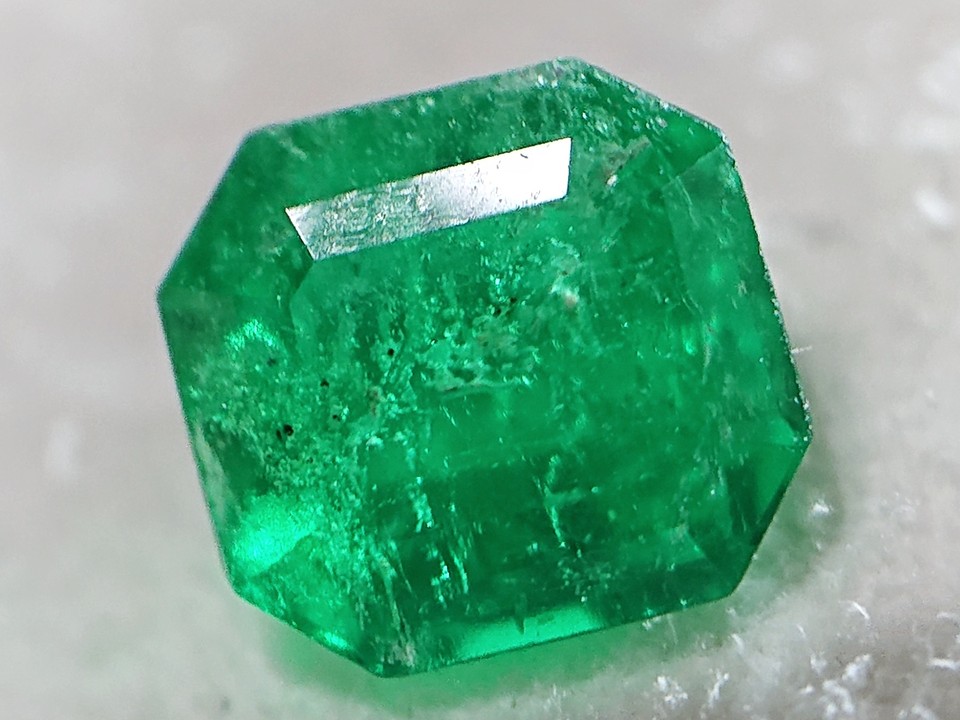
Emerald is the green gemstone by which every other green is judged, a deep, velvety color that has been prized for thousands of years. It is the birthstone of May and one of the four precious stones, with diamond, ruby and sapphire. Emerald asks for a little more care than most gems, and it rewards you with a color nothing else quite matches. We set natural emerald in 925 sterling silver and solid gold at our studio on Sukhumvit 71, Bangkok.
This page covers what emerald is, why almost every emerald is oiled, how it compares with other green gems, how to wear and care for it, what makes a good stone, where it comes from, why it is the May birthstone, how to see the stones at our shop, and how to order in Bangkok or anywhere in Thailand.
What emerald is
Emerald is the green variety of beryl, a beryllium aluminum silicate. Its color comes from traces of chromium, vanadium or both, with a little iron adding a bluish tone in some stones. It is the most famous member of a family that also includes blue aquamarine, pink morganite and yellow heliodor.
Emerald grows with more inclusions than its sister stones. Tiny fractures, crystals and wisps of fluid inside are so typical that the trade calls them the jardin, French for garden. A clean emerald is rare, and a few inclusions are a normal sign of a natural stone.
Because of those fine fractures, most emeralds are filled with a colorless oil, traditionally cedarwood oil, or sometimes a resin, to make the fractures less visible. This has been done for centuries and is standard practice around the world. The amount ranges from none or minor to significant, and a gem lab report states the level. Every stone we set is natural, emerald included, and we tell you about the treatment of each stone before you order.
Emerald facts at a glance
- Color: bluish green to pure green and slightly yellowish green
- Hardness: 7.5 to 8 on the Mohs scale, but more brittle than other beryl
- Family: beryl, with aquamarine, morganite and heliodor
- Treatment: usually oiled to fill fine fractures, a standard practice we disclose
- Best for: pendants, earrings and rings with a protective setting
- Care: lukewarm soapy water only; no ultrasonic or steam cleaning
- Birthstone: May
- Price: depends on the quality and carat you choose; we quote before you order
Emerald and other green gems
Tsavorite is a green garnet, 7 to 7.5 on the Mohs scale. It is brighter and usually cleaner than emerald and is not treated. Emerald has a softer, deeper glow that many people find more romantic.
Chrome tourmaline has a rich emerald-like green from the same element, chromium. It is tougher in daily wear and costs less than a fine emerald.
Peridot is a lighter, yellowish green and softer at 6.5 to 7. It is a cheerful everyday green, while emerald is the classic deep green.
Green sapphire is much harder at 9, but its green is usually darker and more olive. Emerald wins on color, sapphire on durability.
How to wear and care for emerald
Emerald is hard enough to resist scratches, but its inclusions make it more brittle than other gems of the same hardness. A sharp knock can chip or crack it. That is why the emerald cut, a rectangle with cut corners, was developed: it protects the stone where it is weakest. For a ring, a bezel or a setting with protected corners is a good choice. Pendants and earrings are the easiest way to wear emerald every day.
Clean emerald gently in lukewarm water with a mild soap and a soft brush, then dry it. Never use an ultrasonic or steam cleaner, and keep it away from strong heat, solvents and household chemicals, which can remove the oil. Over many years the oil can dry out and the fractures may look more visible; a jeweler can clean and re-oil the stone. If it ever needs a polish or a check of the setting, bring it to our shop. Maintenance is free on jewelry we made.
What makes a good emerald
Color is by far the most important. The finest emeralds are a vivid pure green to slightly bluish green, not too dark and not too light. Pale or yellowish stones are more affordable.
Clarity is judged more gently than with other gems. Inclusions are expected; what matters is that they do not cloud the stone or reach the surface in a way that weakens it.
Treatment level affects value. A stone with no or minor oil is worth more than one with significant filling, so ask about it for an important piece.
Cut and size finish the picture. A good cut shows even color without dark or washed out areas. Fine emeralds over one carat are rare, and the price rises quickly with size.
Where emerald comes from
Colombia is the most famous source, with the historic Muzo and Chivor mines known for warm, pure green stones. Zambia is the other major producer and is known for slightly bluish green emeralds. Emerald also comes from Brazil, Afghanistan, Ethiopia, Zimbabwe, Pakistan and Madagascar. If you want to know the origin of a particular stone, ask us: we offer certified stones, and an uncertified stone can be sent to a gem lab for a report at extra cost.
The May birthstone
Emerald is the birthstone for May, the month of fresh green growth. It has long stood for love and renewal, and it makes a meaningful gift for a May birthday. See our birthstone chart for every month.
See emerald at our shop in Bangkok
Each emerald has its own jardin, the garden of fine inclusions inside, and color decides almost all of its value, so judge it with your own eyes. Name emerald on your booking and Yaron will lay aside extra stones, bluish green through pure green to slightly yellowish green, in several sizes, and explain each one’s treatment.
Walk in any time we are open, or book ahead so Yaron is there to help with the stone, the design and the metal, from 925 silver and gold plating to solid 9K, 14K or 18K gold.
An emerald needs a protective setting, so some people buy the stone first and plan the piece slowly. You can take it home loose, with no jewelry order, and we would be very happy to make that piece for you.
See emerald with Yaron
TOANOI House, 259/80 Phibunwet Village, Sukhumvit 71, Bangkok. Monday to Friday 9:30 to 17:00 and Saturday 10:00 to 15:00. We speak Thai, English and Japanese.
Not in Bangkok? Message us and we will send photos and prices of the emerald we have.
Emerald questions we get
Is your emerald natural?
Yes. Every gemstone we set is natural, emerald included. Most emeralds in the world are oiled to fill fine fractures, a centuries old and accepted practice, and we tell you about the treatment of each stone before you order. We are a member of the Thai Gem and Jewelry Traders Association.
Why are emeralds oiled?
Emerald naturally has tiny fractures. A colorless oil fills them so they show less and the stone looks clearer. It is standard practice, and a lab report states how much filling a stone has.
Can I wear an emerald ring every day?
Yes, with some care. Choose a protective setting, take it off for sports, cleaning and heavy work, and never put it in an ultrasonic cleaner.
Why does my emerald have inclusions?
Almost every natural emerald has them. The trade calls them the jardin, or garden. A few inclusions are normal and show the stone is natural; they only matter if they cloud the color or weaken the stone.
How much does emerald jewelry cost?
It depends on the quality and carat of the stone you choose, and on the metal. We give you the price before anything is made.
Can I buy just the stone?
Yes. Emerald is sold as a loose stone too, without any jewelry order. When you are ready for a setting, whether that is today or months from now, we are happy to make one that protects it.
How long does an emerald piece take?
7 to 10 working days from your order, because the stones are already here in our shop, then 1 to 3 working days for delivery inside Thailand. We also ship abroad by FedEx.
Every emerald piece is made to order by our team in Bangkok in 925 sterling silver or solid gold, with a 3-year warranty, free maintenance and free shipping across Thailand.
