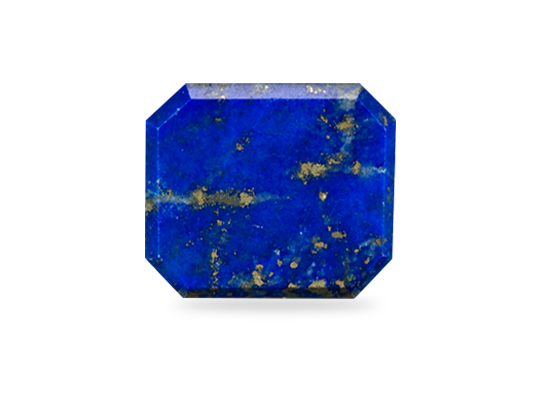
Lapis lazuli is the deep royal blue stone flecked with gold that has been treasured for more than six thousand years. Ancient Egypt used it in royal jewelry, and painters ground it into ultramarine, the most precious blue of the Renaissance. Its calm, rich color is a natural match for gold and looks just as striking in silver. We set natural lapis lazuli in 925 sterling silver and solid gold at our studio on Sukhumvit 71, Bangkok.
This page covers what lapis lazuli is, its treatments, how it compares with other blue stones, how to wear and care for it, what makes a good stone, where lapis comes from, how to see the stones at our shop, and how to order in Bangkok or anywhere in Thailand.
What lapis lazuli is
Lapis lazuli is not a single mineral but a rock made of several. The blue comes from lazurite, a mineral rich in sulfur. The golden flecks are pyrite, the brassy mineral known as fool’s gold. White streaks and patches are calcite, and there can be some sodalite and other minerals too. The mix of these decides how each piece looks.
The name comes from the Latin lapis, stone, and an old Persian word for blue, the same root as the word azure. Because it is a rock, lapis is opaque and is cut as cabochons, flat tablets, beads and inlay rather than faceted.
Lapis is often treated. Wax or oil is commonly rubbed into the surface to improve its polish. Some lapis is dyed to hide white calcite and deepen the blue, and some is stabilized with resin. Paler material is sometimes crushed and bonded into reconstituted lapis. Every stone we set is natural, lapis lazuli included, and if a stone has had any treatment we tell you before you order.
Lapis lazuli facts at a glance
- Color: deep royal blue to violet blue, with gold pyrite flecks and some white calcite
- Composition: a rock of lazurite, calcite and pyrite
- Hardness: 5 to 5.5 on the Mohs scale
- Treatment: wax or oil is common; dyeing and stabilizing exist; all disclosed before you order
- Best for: pendants, earrings, cufflinks and signet style rings worn with care
- Care: wipe with a damp soft cloth; no soaking, ultrasonic, steam or chemicals
- Price: depends on the quality and carat you choose; we quote before you order
Lapis lazuli and other blue stones
Sodalite is the stone most often mistaken for lapis. It is a lighter, grayer blue with white veins and rarely any gold pyrite. It costs less and is a little harder.
Blue sapphire is a transparent faceted gem at 9 on the Mohs scale. If you want a deep blue that sparkles and lasts in an everyday ring, sapphire is the choice. Lapis gives a softer, painted look.
Tanzanite has a violet blue close to fine lapis, but it is transparent and faceted.
Turquoise is the other famous opaque blue stone of the ancient world, sky blue to green rather than royal blue, and also soft and porous.
Lapis also pairs well with other opaque stones. Set with onyx in a man’s ring or cufflinks, it looks bold and classic.
How to wear and care for lapis lazuli
At 5 to 5.5 on the Mohs scale lapis is soft, and because it is a rock it can be a little porous. It shines in pendants, earrings, cufflinks and brooches. In a ring it is lovely for occasional wear or in a signet style setting that protects the edges. Take it off for the gym, washing up, cleaning, swimming and the beach, and put it on after perfume, lotion and sunscreen.
Clean lapis by wiping it with a soft cloth dampened with plain water or very mild soap, then dry it at once. Do not soak it, and never use an ultrasonic cleaner, steam, acids or household chemicals, which can dull the surface or lift a wax finish. Store it on its own in a soft pouch. Over time the polish can soften; a fresh polish brings back the glow. If it ever needs a polish or a check of the setting, bring it to our shop. Maintenance is free on jewelry we made.
What makes a good lapis lazuli
Color comes first. The most valued lapis is an intense, even royal blue to slightly violet blue, with no green tint.
Calcite lowers the value. The best stones show little or no white. Grayish or streaky lapis is more affordable and has its own natural charm.
Pyrite is a matter of taste. Small, evenly scattered gold flecks are prized and look like stars in a night sky. Too much pyrite, or large patches of it, lowers the value.
Polish should be smooth and glossy, with no pits or dull spots, since a good polish is what makes the blue glow.
Treatment is worth asking about. Lightly waxed natural lapis is normal; dyed, stabilized or reconstituted lapis costs less, and we always tell you which is which.
Where lapis lazuli comes from
The finest lapis lazuli comes from the Badakhshan region of northeastern Afghanistan, where the mines of Sar-e-Sang have been worked for more than six thousand years. Chile produces lapis in the Andes, often with more white calcite and a lighter blue. More comes from Russia, near Lake Baikal, as well as from Pakistan and the United States.
If you want to know the origin of a particular stone, ask us: we offer certified stones, and an uncertified stone can be sent to a gem lab for a report at extra cost.
See lapis lazuli at our shop in Bangkok
Each piece is its own mix of blue lazurite, gold pyrite and white calcite, so the fair way to judge lapis is up close, turning it in your fingers. Book ahead and tell us it is lapis you want, and we will have extra pieces waiting in several shades of blue and in different sizes.
Walk in any time we are open, or book ahead so Yaron is there to help with the stone, the design and the metal, from 925 silver and gold plating to solid 9K, 14K or 18K gold.
Pick the piece whose gold flecks you like best and you can take it home as a loose stone, with no jewelry order needed. We would be very happy to make something with it for you too.
See lapis lazuli with Yaron
TOANOI House, 259/80 Phibunwet Village, Sukhumvit 71, Bangkok. Monday to Friday 9:30 to 17:00 and Saturday 10:00 to 15:00. We speak Thai, English and Japanese.
Not in Bangkok? Message us and we will send photos and prices of the lapis lazuli we have.
Lapis Lazuli questions we get
Is your lapis lazuli natural?
Yes. Every gemstone we set is natural, lapis lazuli included. Lapis is often waxed or oiled to improve its polish, and some is dyed or stabilized, and if a stone has had any treatment we tell you before you order. We are a member of the Thai Gem and Jewelry Traders Association.
Are the gold flecks in lapis real gold?
No. They are pyrite, a brassy mineral known as fool’s gold. Small, evenly scattered flecks are a sign of good natural lapis.
Can lapis lazuli get wet?
A quick splash is fine, but do not soak it or wear it swimming. Lapis is soft and a little porous, so wipe it with a damp cloth and dry it at once.
How can I tell lapis from sodalite?
Lapis is a deeper royal blue, usually with gold pyrite flecks. Sodalite is a lighter, grayer blue with white veins and rarely any gold.
How much does lapis lazuli jewelry cost?
It depends on the quality and carat of the stone you choose, and on the metal. We give you the price before anything is made.
Can I buy just the stone?
Yes. Lapis lazuli is available on its own as a loose stone, without a setting. We are happy to set it for you now or later, for example in a pendant, cufflinks or a signet style ring.
How long does a lapis lazuli piece take?
7 to 10 working days from your order, because the stones are already here in our shop, then 1 to 3 working days for delivery inside Thailand. We also ship abroad by FedEx.
Every lapis lazuli piece is made to order by our team in Bangkok in 925 sterling silver or solid gold, with a 3-year warranty, free maintenance and free shipping across Thailand.
