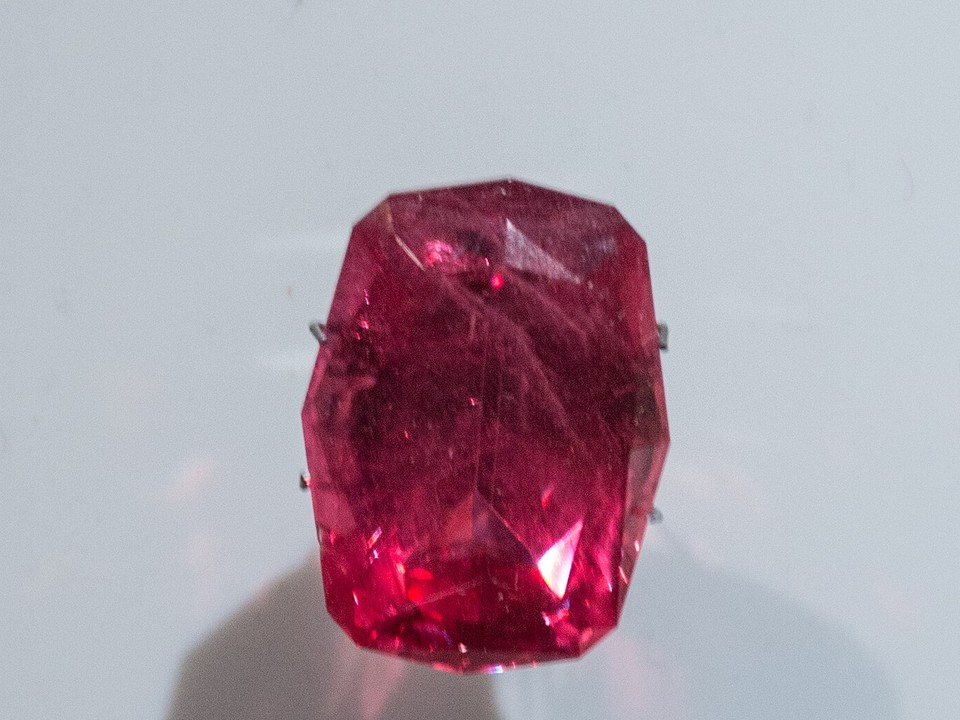
Ruby is the red stone everyone knows by name, the July birthstone and for centuries the gem of kings and of love. It is also one of the hardest gems you can wear, so a ruby ring can be worn every day for a lifetime. Bangkok and Chanthaburi have traded rubies for generations, and choosing one here means you can see many stones side by side before you decide. We set natural ruby in 925 sterling silver and solid gold at our studio on Sukhumvit 71, Bangkok.
This page covers what ruby is, how heating works, how ruby compares with other red gems, how to wear and care for it, what makes a good stone, where rubies come from, how to see the stones at our shop, and how to order in Bangkok or anywhere in Thailand.
What ruby is
Ruby is red corundum, an aluminum oxide crystal. Corundum in every other color is called sapphire, so ruby and sapphire are sisters: the same mineral, the same hardness, and the only difference is color. The red comes from a small amount of chromium. Chromium also makes many rubies glow red under sunlight and ultraviolet light, which is part of why a good ruby looks so alive.
Where corundum stops being ruby and becomes pink sapphire is a question of how deep the red is. The trade draws the line by eye, and labs in different countries draw it in slightly different places. A strong red to slightly purplish red is ruby. A lighter, pinker stone is pink sapphire.
At 9 on the Mohs scale ruby is harder than every gem except diamond, and it has no easy cleavage, so it resists both scratches and chips.
Most rubies on the market have been heated. Heating is an old, stable and widely accepted treatment that improves color and clarity, and it lasts for the life of the stone. Some rubies are treated in other ways, for example with glass filling in fractures, and those stones need gentler care and cost far less. Unheated rubies are rare and cost much more. Every stone we set is natural, ruby included, and if a stone has had any treatment we tell you before you order.
Ruby facts at a glance
- Color: red, from slightly orangy red to purplish red
- Mineral: corundum, the same mineral as sapphire
- Hardness: 9 on the Mohs scale
- Treatment: heating is common and stable; any treatment is disclosed before you order
- Best for: engagement and everyday rings, pendants, earrings and bracelets
- Care: warm soapy water and a soft brush
- Price: depends on the quality and carat you choose; we quote before you order
Ruby and other red gems
Red spinel was confused with ruby for centuries, and some famous crown jewels once called rubies are spinel. It is a little softer at 8, usually untreated, and costs less than a ruby of the same look.
Rubellite is red to raspberry pink tourmaline. It has a lovely deep color and costs much less, but at 7 to 7.5 on the Mohs scale it is softer and better suited to pendants and earrings than to a ring worn every day.
Garnet gives a darker wine red at a friendly price. Rhodolite, the raspberry garnet, is the closest in color to a pinkish ruby. Garnets are 6.5 to 7.5 on the Mohs scale.
Pink sapphire is the same mineral as ruby in a lighter color. If you love the hardness of ruby but want a softer, pinker look, it is the natural choice.
How to wear and care for ruby
Ruby is one of the easiest gemstones to live with. It suits a ring you never take off, a tennis bracelet, studs and pendants alike. As with any jewelry, take it off for the gym, gardening and heavy work, more to protect the setting and the metal than the stone.
Clean a heated ruby in warm soapy water with a soft brush, then rinse and dry. A ruby with glass filling should stay away from ultrasonic cleaners, steam, strong heat and acids, so ask us which kind you have. Store ruby apart from softer stones, because it will scratch them. If it ever needs a polish or a check of the setting, bring it to our shop. Maintenance is free on jewelry we made.
What makes a good ruby
Color decides most of the value. The most prized rubies are a pure, strong red to slightly purplish red, neither too dark nor too pink, with a glow that holds under indoor light. The trade calls the finest of these pigeon’s blood. Lighter or slightly brownish stones are lovely and cost less.
Clarity is judged more gently than in diamonds. Almost every natural ruby has small inclusions, and fine needles called silk are normal. What you want is a stone that looks bright and clean to the eye, without inclusions that break the light or reach the surface.
Cut brings the color to life. A well cut ruby shows red across the whole face, without a dark or washed out window in the middle. Ovals and cushions are the most common shapes because they keep the most weight from the rough.
Size matters a lot. Fine rubies over one carat are rare, and the price climbs quickly with every step in size. A smaller stone of better color often looks richer than a large pale one.
Treatment is the last question. Heated rubies are the normal standard. An unheated ruby with a lab report costs much more, and a glass filled ruby much less.
Where ruby comes from
Myanmar, especially the Mogok valley, has been the classic source of fine ruby for centuries. Today a large share of the world’s rubies comes from Mozambique, with more from Madagascar, Tanzania, Kenya, Sri Lanka, Vietnam and Afghanistan.
Thailand has a long and proud place in the ruby story. The gem fields of Chanthaburi and Trat produced rich, dark red rubies for many years, and Chanthaburi grew into one of the world’s great markets for cutting, heating and trading ruby and sapphire. Many of the world’s rubies still pass through Thai hands on their way to a jeweler, which is one reason Bangkok is such a good place to choose one.
If you want to know the origin of a particular stone, ask us: we offer certified stones, and an uncertified stone can be sent to a gem lab for a report at extra cost.
The July birthstone
Ruby is the birthstone for July and the traditional gem for a fortieth wedding anniversary. It is a favorite for a July birthday, for a love gift, and as one of the stones in a family ring where each person gets their own month. Our birthstone chart shows all twelve months if you are building a ring or bracelet for the whole family.
See ruby at our shop in Bangkok
Color decides most of a ruby’s value, and a smaller stone of better color often looks richer than a large pale one, which shows only side by side. Book ahead, mention ruby, and we will bring out more stones from slightly orangy red to purplish red, in ovals, cushions and other shapes and sizes.
Walk in any time we are open, or book ahead so Yaron is there to help with the stone, the design and the metal, from 925 silver and gold plating to solid 9K, 14K or 18K gold.
Ruby is hard enough for any kind of piece, so a loose stone keeps every option open. Buy one without having jewelry made, and we would be very happy to make a piece for you whenever you choose.
See ruby with Yaron
TOANOI House, 259/80 Phibunwet Village, Sukhumvit 71, Bangkok. Monday to Friday 9:30 to 17:00 and Saturday 10:00 to 15:00. We speak Thai, English and Japanese.
Not in Bangkok? Message us and we will send photos and prices of the ruby we have.
Ruby questions we get
Is your ruby natural?
Yes. Every gemstone we set is natural, ruby included. Most rubies are heated to improve color and clarity, which is stable and widely accepted, and if a stone has had any treatment we tell you before you order. We are a member of the Thai Gem and Jewelry Traders Association.
What is the difference between ruby and sapphire?
Nothing but color. Both are corundum, 9 on the Mohs scale. Red corundum is ruby, and every other color, including pink, blue and yellow, is sapphire.
Is a heated ruby still natural?
Yes. Heating only improves the color and clarity a stone already has, and the result is permanent. A heated ruby is a natural ruby, and most rubies sold around the world are heated.
Can I wear a ruby ring every day?
Yes. At 9 on the Mohs scale ruby is one of the hardest and toughest gems, so it is a very good choice for an engagement or everyday ring.
How much does ruby jewelry cost?
It depends on the quality and carat of the stone you choose, and on the metal. We give you the price before anything is made.
Can I buy just the stone?
Yes. A ruby can leave our shop as a loose stone, with no jewelry order attached. Should you want it set into a ring, pendant or studs, today or later on, we are happy to make it.
How long does a ruby piece take?
7 to 10 working days from your order, because the stones are already here in our shop, then 1 to 3 working days for delivery inside Thailand. We also ship abroad by FedEx.
Every ruby piece is made to order by our team in Bangkok in 925 sterling silver or solid gold, with a 3-year warranty, free maintenance and free shipping across Thailand.
Photo: Tim Evanson, CC BY-SA 2.0.
